

Exploring Career Paths for Women in Motorsport
- nicole7392
- Mar 3
- 4 min read
Updated: Mar 8
The world of motorsport is often perceived as a male-dominated arena defined by high-speed competition and adrenaline-filled races. Yet across the industry there is growing recognition of the vital role women play, not only as drivers but across the many professional disciplines that make racing possible. In this article, we explore the wide range of career opportunities available in motorsport and highlight the essential work carried out in technical, operational, medical, media, and leadership roles, and how these contributions support the success of the sport as a whole.
The Changing Landscape of Motorsport
Motorsport is far more complex than what happens on the circuit. Every race weekend depends on a large network of professionals working together to make the sport possible. Engineers analyze performance data, officials manage regulations and safety, medical teams stand ready to respond, and communications and event professionals ensure teams, sponsors, and fans remain connected.
A modern race event is the result of hundreds of specialists coordinating their work under intense pressure. From technical development and race strategy to logistics, broadcasting, and safety operations, motorsport functions as a highly organized ecosystem where many different skills come together.
As the sport evolves, women are increasingly present across this broader professional landscape and are part of the expertise and professionalism that allow the industry to operate.
Motorsport Is a Team Sport
Drivers may receive the spotlight, but motorsport has always depended on the coordinated effort of many professionals working together.
For many young women interested in the sport, the challenge is not simply understanding that these careers exist, but knowing how to access them. Motorsport can be difficult to enter without connections, mentorship, or clear pathways into the industry. Opening doors and making those pathways more visible is an important step toward ensuring more women can pursue careers within the sport.
Engineering and Technical Leadership
Engineering remains one of the most influential areas of motorsport. Race teams depend on engineers to interpret data, optimize performance, and translate technical insight into competitive advantage. From aerodynamics and vehicle dynamics to race strategy and simulation, engineering decisions shape nearly every aspect of a race weekend.
Women have increasingly taken on important roles across this technical landscape. In Formula One, Ruth Buscombe worked as a race strategy engineer for Scuderia Ferrari, Haas F1 Team, and Sauber (later Alfa Romeo F1 Team), helping make real-time strategic decisions that directly influence race outcomes.
At Red Bull Racing, Hannah Schmitz serves as Head of Race Strategy and has played a key role in multiple championship seasons through critical race-day strategy calls.
In endurance racing, Leena Gade became the first female race engineer to win the 24 Hours of Le Mans while working with Audi Sport Team Joest, later adding two more Le Mans victories with the team.
Women also contribute to the scientific and research side of motorsport. Physicist Diandra Leslie-Pelecky has worked extensively with the NASCAR community, visiting race shops and teams to study and explain the science behind stock-car racing. Her book The Physics of NASCAR explores how engineering, materials science, aerodynamics, and vehicle dynamics shape the sport.
Leadership roles have expanded as well. Claire Williams served as Deputy Team Principal of Williams Racing from 2013 to 2020, helping guide one of Formula One’s most historic teams through a challenging competitive period.
Sporting Officials and Race Governance
Race control and sporting governance form the backbone of fair competition. Clerks of the course, stewards, and race directors are responsible for interpreting regulations, managing safety procedures, and making real-time decisions that affect teams and drivers.
These roles require extensive experience, calm judgment under pressure, and deep knowledge of the sport. Women are increasingly serving in these capacities across international series, national championships, and grassroots racing organizations.
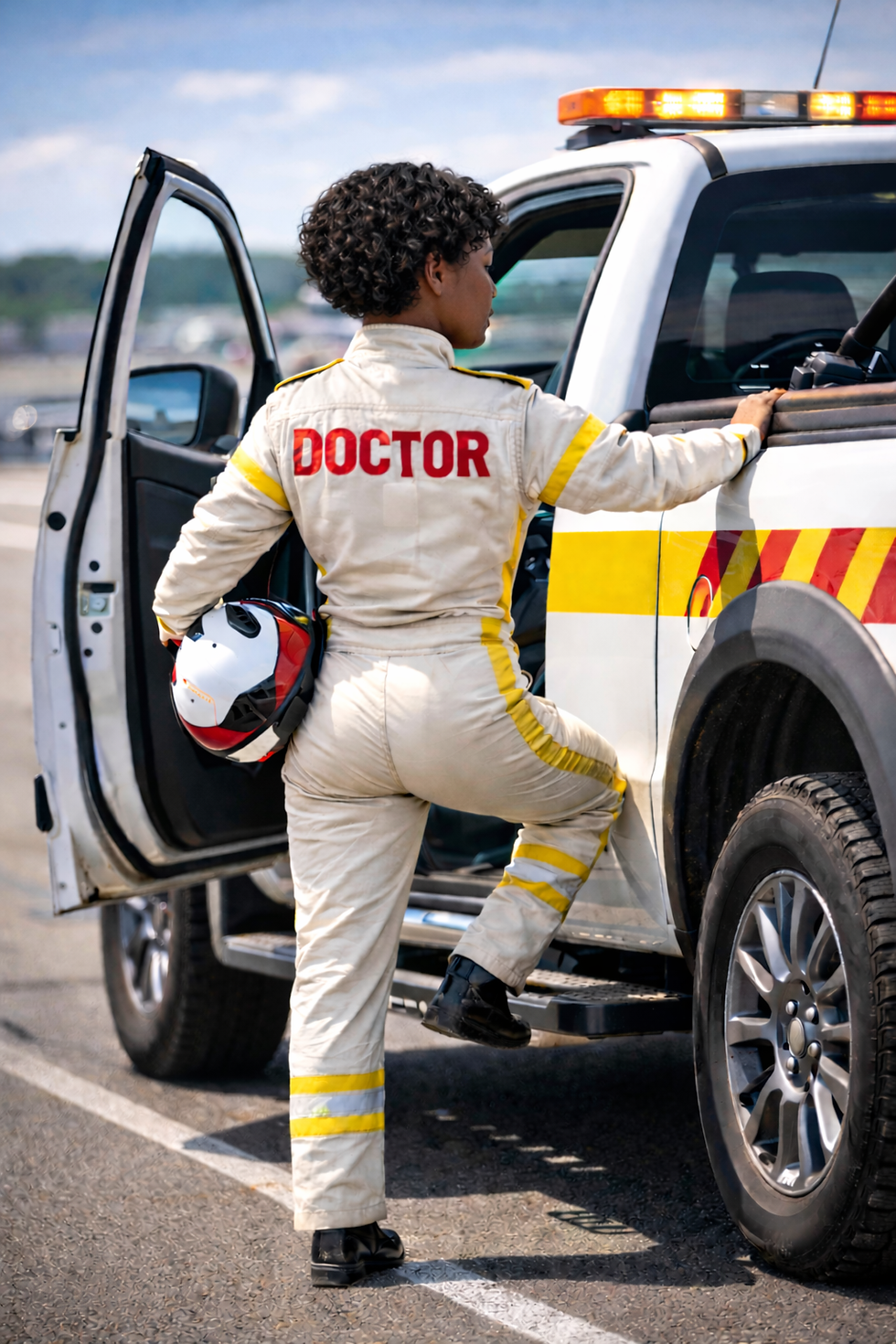
Safety and Medical Teams
Few people outside the industry fully appreciate the level of preparation behind motorsport safety.
Highly trained marshals, rescue teams, and specialized physicians/traumatologists operate within carefully structured medical systems designed specifically for high-speed racing environments.
Motorsport medicine has developed into its own discipline, with physicians trained to respond to the unique forces and injuries associated with racing incidents.
These teams represent one of the most critical components of any race event.
Media, Communications, and Storytelling
Motorsport’s global reach depends heavily on media professionals who document, interpret, and communicate the sport.
Journalists, broadcasters, photographers, and digital media specialists shape how audiences experience racing. Their work brings technical developments, human stories, and competitive drama to fans around the world.
Broadcasters such as Amanda Busick, who covers the NHRA Mission Foods Drag Racing Series for Fox Sports, demonstrate how experienced journalists help audiences understand the technical and human sides of motorsport.
Event Operations and Industry Management
Every race weekend requires extensive planning and coordination long before cars reach the grid.
Event managers, series administrators, logistics teams, and commercial managers ensure that circuits are prepared, schedules are coordinated, safety systems are in place, and sponsors and fans are engaged.
These roles require a combination of organizational expertise, leadership, and the ability to manage complex live events under tight timelines.
Why Visibility Matters
As more women become visible across these professional roles, the perception of who belongs in motorsport continues to evolve.
For young people considering careers in the industry, seeing experienced professionals working in engineering, race operations, media, and safety can help broaden the understanding of what a motorsport career actually looks like.
Comments